
What you need to know about caring for your Kia car tyres
Your tyres can have a significant effect on driving safety due to their inflation pressure, tread depth or wheel alignment. Checking pressure and tread wear (at least once a month) is relatively simple. Knowing when, how and whether you should rotate tyres demands more expertise. So does identifying and resolving incorrect wheel alignment. If you’re not sure what you’re looking for, your local Kia dealer can help you.
Tyre Pressure
Tyre pressure makes a big difference to how your tyres perform. If you have received an alert on your dashboard about your tyre pressure or haven’t looked at them in a while, they will need to be checked.
Low tyre pressure (A) causes uneven tyre wear and poor grip during cornering – especially in wintery conditions. Tyre pressure that’s too high (B), leads to severe tread wear – meaning your tyres won’t last as long – as well as steering difficulties and higher fuel consumption. The wrong pressure also increases your braking distance. Tyres with the correct pressure (C) last longer, reduce fuel consumption and contribute to safe road holding.
If the tyre pressure changes suddenly or repeatedly, you should contact your Kia dealer immediately. It is important to make yourself aware of your Kia model’s ideal tyre pressure. For example, the recommended tyre pressure for a Kia Picanto ranges from 33 PSI (front) to 30 PSI (rear), while a Kia Sorento and Kia Sportage need 35 PSI for both the front and rear tyres. Meanwhile, the Kia EV9 has a slightly higher ideal tyre PSI of 36.

Wheel alignment
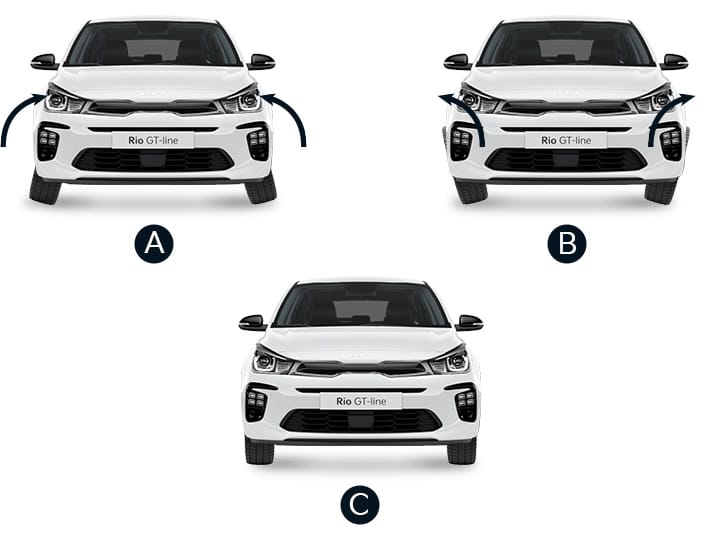
Incorrect wheel alignment may cause greater wear on the inside edge of your tyres (A) or the outside edge (B).
Correctly aligned wheels are parallel to each other on each axle and at 90° to a level road surface (C). Wheel alignment requires specialist equipment and expert knowledge.
If you suspect your Kia’s wheel alignment needs adjustment, contact your Kia-authorised dealer.
Tyre Rotation
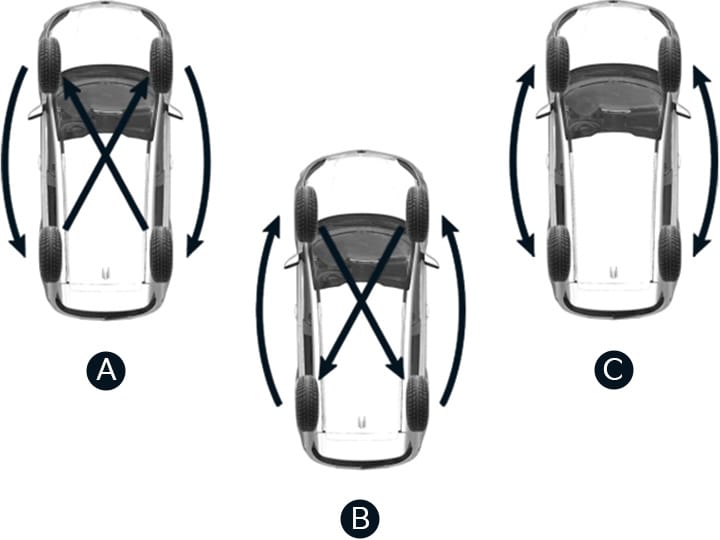
Rotating the tyres on your Kia can help to minimise wear and maximise their lifespan. There are several different ways in which tyres can be moved around on the vehicle depending on the type and whether the vehicle uses front, rear, or four-wheel drive. Rotation sequences include:
- Always moving the most worn tyres in the worst condition to the front
- A rear-to-front, front-to-rear and side-to-side rotation
- A simple front-rear swap.
Talk to your Kia-authorised dealer for up-to-date advice and guidance.
Checking tread depth
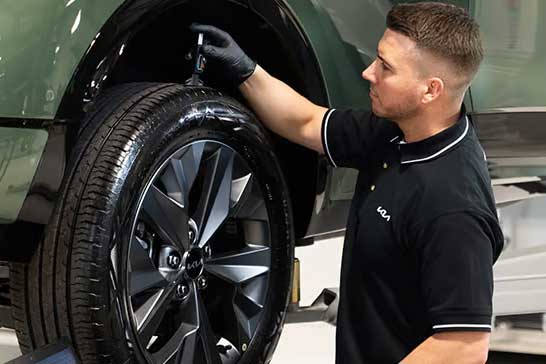
Most car tyres have wear indicators: rubber bars incorporated into the tread pattern. When they are level with the tyre surface, you must have new tyres fitted.
However, it is generally recommended to change tyres when they reach a minimum of 4 mm tread depth. You should also regularly check the tread depth of your tyres to ensure your safety.
Your Kia-authorised dealer can check your tyres and change them for you if required.
Professional tyre change for your peace of mind
When it’s time to change the tyres on your car – whether for the changing seasons, especially winter, or due to wear – it’s important to have the job done professionally.
Kia-trained technicians have the experience, tools and expertise you need for the peace of mind you want.